Emox rev Reviews For Each New

We Love What We Do.

About Us


Expertise

The site includes more working experience in the field reviews and Marketing

Our Serives

The site draw up a plan for marketing the product on a large scale with the largest number of access

Efficiency

Enjoy the site efficiently in audits and mapping scheme is excellent for review

Contact

Contact us and will reply to you within only 24 hours or less

We offer the service review of the products for free!

Order Now

Portfolio


Main Blog
Our Recent reviewS

Mar 4, 2017

Amazon Echo Dot review (2016): Forget the Echo. Buy this instead.


The robot assistants we were promised as children are finally ready for the home. Well, sort of. Instead of walking, talking humanoid automatons like Rosie from The Jetsons and Robby the Robot from Lost in Space, our well-spoken helpers are housed in plastic and sit on tables. They answer our questions, control our homes and sometimes tell us a story. The most ubiquitous assistant so far has been Alexa, an Amazon-powered attendant that has made the jump from a $180 tower to the $50 Dot, which isn't much bigger than a hockey puck. That sort of drop in size usually results in a loss of features. In this case, you're going to want to go tiny.


Summary
The Dot is a smaller yet just as powerful version of the Amazon Echo. What it lacks in an internal speaker system it makes up for with an audio-out port and Bluetooth connectivity. While the app and inability to route queries to a single Alexa device within close proximity of each other can be annoying, the $50 price and Alexa's usefulness make the Dot a solid option for anyone who wants to start building a connected home on the cheap.

Hardware
At only 1.3 inches tall, the Dot (available in black or white) virtually disappears into your home. It can be placed anywhere, and it won't disrupt your carefully decorated room. Like the larger Echo, the second-generation Dot can be used to fill an Amazon cart. But that's not the only thing people use it for. Instead, the Alexa platform is an incredibly helpful connected home hub, a fountain of random   facts, an audiobook reader and a music player. Indeed, it's music where the Dot really shines, thanks to an audio-out port and Bluetooth speaker support. That gives it access to nearly any audio system in your home. The full-size Echo's built-in speakers sound fine too, but the stereo system I already own sounds better.
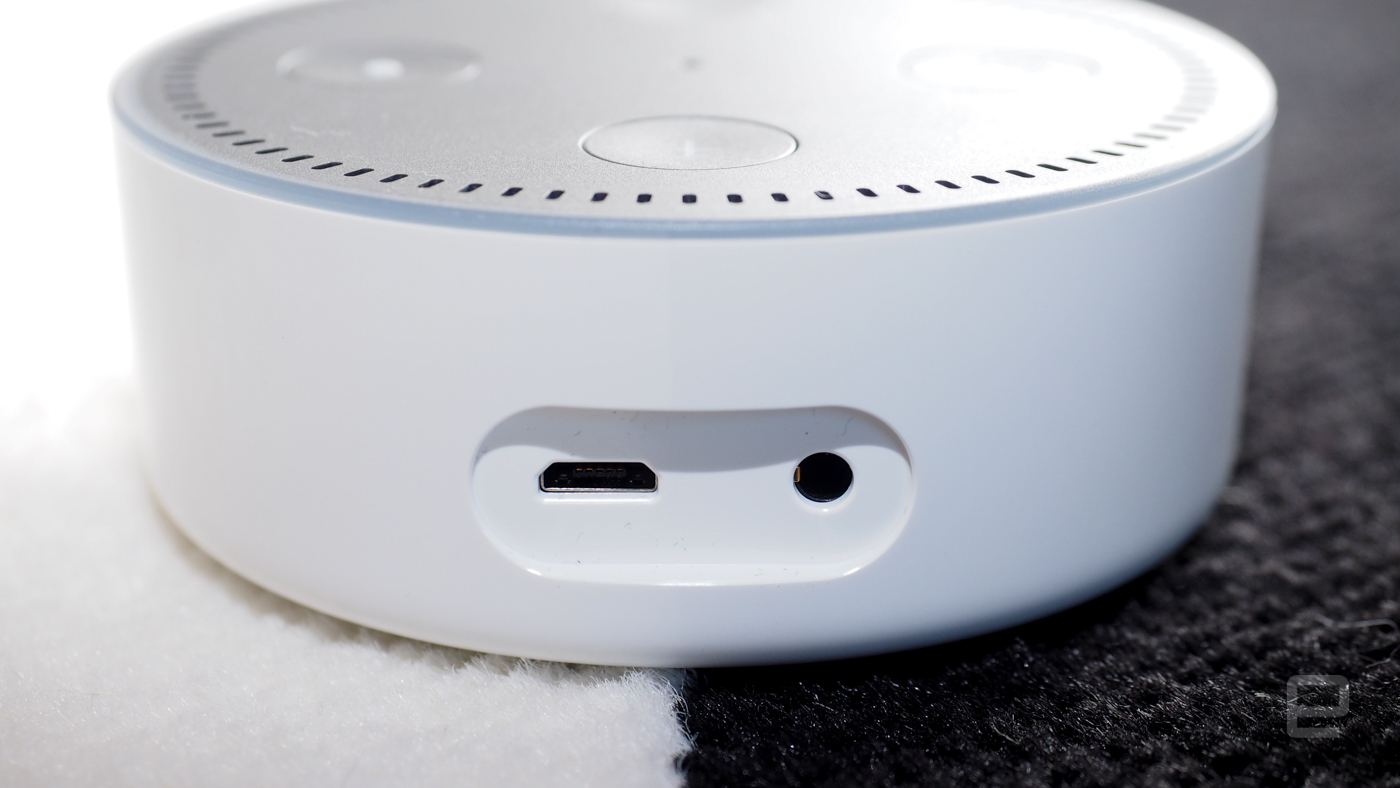


Also, you can switch between wired and Bluetooth speakers on the fly by enabling and disabling the Bluetooth connection with your voice. That feature allowed me to switch my audio source in two different rooms using a single Dot. That said, the Alexa platform does work with Sonos if you want that type of audio system and you have the money. Unfortunately, you can't play audio out of both a wired and a Bluetooth source at the same time. Like the Echo, the Dot has an internal speaker, but it's too anemic for audio playback to be truly enjoyable.

And while about 90 percent of your interactions with the digital assistant will be voice-based, there are physical buttons on top of the device as well. The most important of those is Microphone Off, which, as you'd expect, stops the device from listening for the "Alexa" wake word. It's a great feature for when you want to discuss sensitive topics and you're feeling a bit paranoid. Indeed, there's good reason for being cautious with sensitive material: Sometimes the Dot and Echo think they hear "Alexa," even when that's not what you said. Now a bit of your conversation has been recorded as aquery, sent to Amazon's servers and also stored in the app.
Additionally there are volume buttons that replace the full-size Echo's twistable top. Fans of the knob will be disappointed, but most of the time I use my voice to raise and lower the volume anyway. The buttons are surrounded by an LED ring that indicates when the Dot is listening and thinking. It also reflects the current speaker volume. It's a nice indicator that your assistant is listening, and it can be seen from across the room without being too bright or blinding.

In use
The thousands of "Skills" (what Amazon calls third-party add-on features for the Alexa platform) are where Amazon has a distinct advantage over Google's forthcoming speaker hub, called the Home. It already supports popular connected-home brands such as Nest, SmartThings, Philips Hue and IFTTT, as well as platforms from WeMo, Insteon, Lutron, Honeywell and Ecobee, among others. Plus it works with travel and recipe apps. You can order a pizza, flowers and a car with it. You can check bank balances and get news briefings from NPR, Fox and the AP. You can hear sports scores from ESPN, and you can even figure out how much gas is in your car using the "Automatic" Skill.

I tried nearly all of these (except ordering pizza, because ew, Dominos) and they all worked like a charm. But the Skills library -- like all app stores -- is filled with some add-ons that are better left ignored. For example, the Moon Age add-on notes, "you can know the moon age by asking to [sic] Echo." What does that even mean?

OLYMPUS DIGITAL CAMERA

Adding all these Skills requires using the Alexa app, which is clearly the weak link of Amazon's platform. I've been using an Echo for more than a year, and in the past few months the app, frankly, has been a pain to use. The issue is that it says it's not connected to the internet, even when my phone and Echo speaker both can access the network without a problem. If it doesn't think it's online, the app becomes worthless. Fortunately, you can also tap into Alexa via your web browser. That workaround has consistently worked for me. But I usually learn of a new Skill while on the go, and if 20 percent of the time I can't add it because the app is buggy, that's frustrating.

Another confounding thing is that you can't really have two Alexas in adjoining rooms. Amazon says that its Echo Spatial Perception feature (ESP) determines which device hears you the best and sends answers only to that piece of hardware. But during my tests, the Dot and the Echo both replied and answered when I said the wake word or made a query. Even if I was sitting in front of one of them, if the other assistant heard me, it would react. To combat this, I changed the wake word on one device to "Echo." Those in larger houses with more rooms might have a different experience altogether, though.

The competition
While there are rumors of an Apple device on the horizon, the only real challenge to Alexa's dominance in this field is the forthcoming Google Home. While the Home does have some Internet of Things capabilities, they pale in comparison with the Echo and the Dot. While the Google offering works with four connected home platforms, Alexa supports more than 13 different manufacturers and developers. But the $129 device will allow for audiocasting to multiple devices that support Google's audio and video streaming service. The Dot, meanwhile, can send music only to a single device.

The Amazon Dot is also out sooner, but only by a few weeks. It starts shipping next week, on October 20th, while Google Home goes on sale November 4th. Engadget will have a full review of Home once it's available, so stay tuned for that over the coming weeks.

Wrap-up
OLYMPUS DIGITAL CAMERA

Even with multiple wake words, the inability to stream to multiple devices and an app that sometimes fails, the Amazon Dot is an incredible value at $50 a pop. Dropping one in the kitchen and one in the living room seems like a no-brainer. I've used the Echo tower for more than a year and it's one of the only -- if not the only -- IoT devices that actually works as advertised while continuing to gain features. Alexa doesn't roll around the house cleaning up your mess like the home robot of our dreams, but it does make your life better by bringing all your various services and information into an easy-to-use setup. Plus, thanks to the audio jack, the $50 Dot is a much better value than its taller cousin. Just don't call it Rosie.


Feb 26, 2017

HP Spectre x360 15 (2017)


The 2017 HP Spectre x360 15 (starts at $1,279.99, $1,499.99 as tested) is one of a growing number of large-screen 2-in-1 convertible-hybrid laptops. Its 15.6-inch 4K screen is large enough for both consuming media and creating art, and the Intel Core i7 processor, discrete Nvidia GeForce 940MX graphics card, large 512GB solid-state drive (SSD), and included active drawing stylus give it sufficient power and flexibility to manage both. Larger than its 13-inch sibling, the HP Spectre x360 13-w023dx (our latest top pick), it's good for the power user who needs a desktop-replacement laptop but wants something modern, or the budding art student. But if you don't need the bigger screen, or you do need longer battery life, the smaller Spectre x360 is 
a better choice.


Flip for Video

Clad in aluminum and glass, this Spectre x360 15$1,599.99 at Amazon is "Ash Silver" (dark gray), and has copper accents around its edge and on the HP logo on its lid. The laptop measures 0.7 by 14 by 9.88 inches (HWD) and weighs 4.39 pounds, making it larger than the latest 15-inch Apple MacBook Pro$2,249.00 at Amazon but a bit slimmer in width than last year's HP Spectre x360 15t (15-ap012dx). It will fit neatly into any commute bag made for a 15-inch notebook, with or without the included neoprene sleeve.

The Best Electric Toothbrush

The best electric toothbrush for you depends on your unique preferences and budget. Certain health conditions may also influence the type of brush you choose, so if you’re unsure what kind of toothbrush you need, you should start by consulting your dentist.

Is an electric toothbrush worth the investment?

Sure, electric toothbrushes look flashy, but do they really do a better job of cleaning your teeth? According to a recent study by Cochrane, an independent organization that gathers and summarizes health research for consumers, power toothbrushes have been linked to greater reductions in plaque and gingivitis, compared to manual brushes. These benefits appear to increase with consistent use, so there may be something to the idea that power toothbrushes do a better job.
This isn’t to say your oral hygiene is suffering if you use a manual toothbrush. Every source I consulted made one thing very clear: How you brush is more important than what you brush with. If you carefully brush your teeth twice a day for two minutes each time and floss regularly, an electric toothbrush may not be worth the investment.
But let’s be honest — most people don’t brush for two whole minutes, and flossing isn’t usually high on the priority list. In that case, a little extra help from an electric toothbrush goes a long way in maintaining your oral health. Most rechargeable toothbrushes have built-in timers to ensure you’re brushing for the full two minutes. Some also have quadpacers, which notify you every 30 seconds, so you spend equal time on all areas of your mouth.
If you struggle with arthritis or limited mobility, a power toothbrush is probably a better choice. The toothbrush provides much of the brushing action for you, so you get a better clean with a lot less movement on your part.
People who have a tendency to brush too hard with a manual brush may prefer a power toothbrush with a pressure sensor. Brushing too hard can damage the gums and erode tooth enamel, and a pressure sensor’s feedback helps you avoid this.
Beyond that, if you believe you’re getting along fine with your regular toothbrush, you don’t need to run out and buy an electric one. But if you think your brushing habits could use improvement, a power toothbrush is a smart investment.

Battery-Powered Versus Rechargeable Electric Toothbrushes

In most cases, rechargeable electric toothbrushes are the way to go. They require a bigger upfront investment, but you get a lot more for your money. Plus, timers, brushing modes, pressure sensors, UV sanitizers — you won’t find any of them in your average battery-powered toothbrush, which is essentially just a manual toothbrush that vibrates.

Cost

Price is the main reason most users choose a battery-powered brush over their rechargeable counterparts. A battery-powered brush costs just a few dollars more than a manual brush, while rechargeable toothbrushes can cost upward of $200. Plus, there’s the additional cost of replacement heads. There are cheap rechargeable electric toothbrushes on the market as well, and these are usually basic models. They’re still more expensive than battery-powered brushes, but they’re a good option if your budget is limited.

Warranties & Guarantees

Warranties are another factor to consider. As a general rule, battery-powered toothbrushes don’t include them, while most rechargeable brushes do. If your rechargeable electric toothbrush breaks within the first two years after purchasing it, you can get it repaired or replaced at no additional cost. This may justify paying a little more upfront for a rechargeable model.

Kids

Kids’ rechargeable electric toothbrushes are rare, although both Oral-B and Philips Sonicare offer a rechargeable model for older children. If you’re looking for an option for a younger child, you’re limited to battery-powered or manual brushes.

Rotating-Oscillating Versus Sonic Electric Toothbrushes

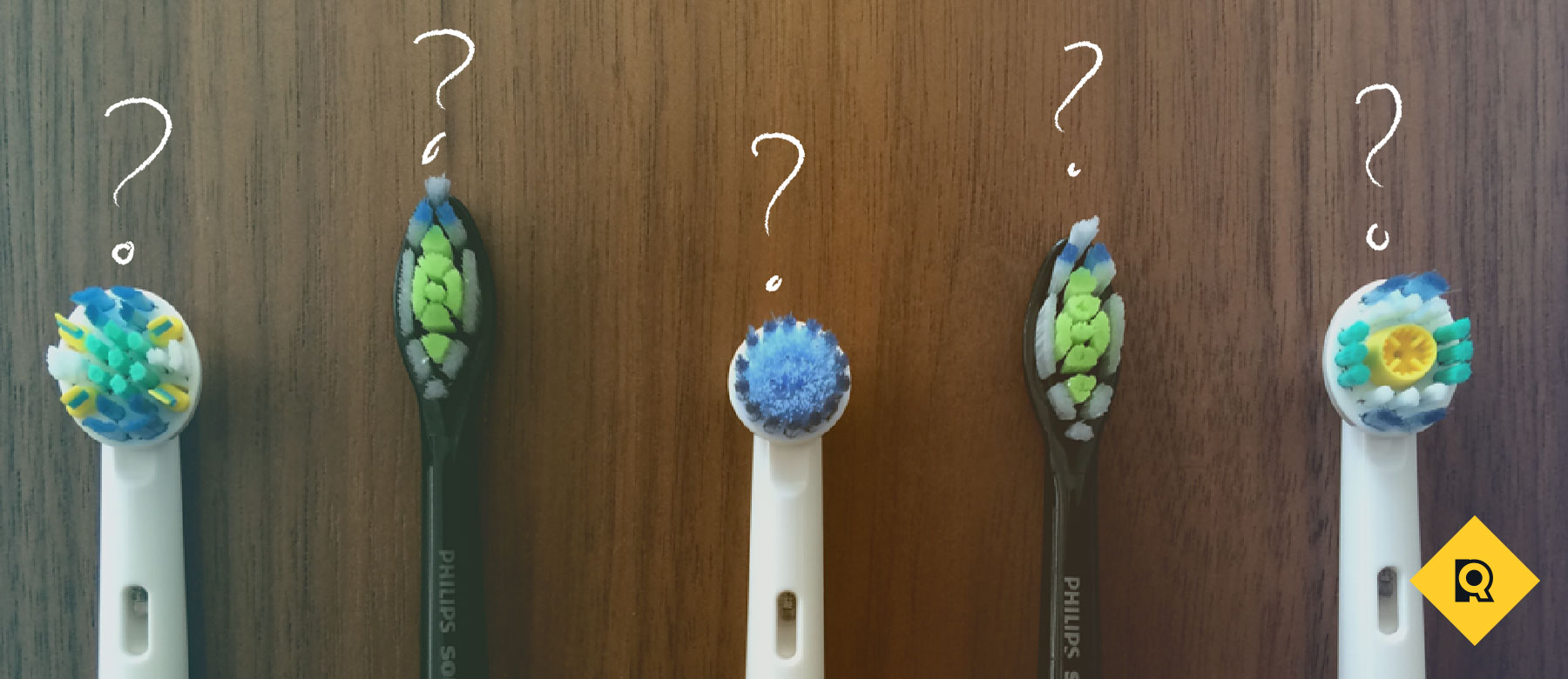
Another way to phrase this would be: Oral-B vs. Philips Sonicare. These are the two major players in the rechargeable electric toothbrush market. These buzzwords are often thrown around the market, but what do they actually mean — and what difference do they make to you?

Oscillating

Oral-B’s rotating-oscillating toothbrushes come with smaller, round toothbrush heads that turn quickly in one direction and then in the other.

Sonicare

Philips Sonicare brushes are shaped like a regular toothbrush head and vibrate side to side at very high speeds, in some cases over 30,000 times per minute.
As mentioned above, Cochrane did a systematic review of the different types of power toothbrushes and concluded that the rotating-oscillating models proved more efficient at reducing plaque and gingivitis than other types of toothbrushes. But the difference was slight and the authors noted it was unclear what clinical significance it had.
Personal preference comes into play here. Until you try them out, it’s difficult to be sure which type you’ll prefer. Rotating-oscillating does seem to hold two distinct advantages, though. The smaller brush head is easier to maneuver into tight spaces in your mouth, enabling you to better cover all surfaces. In addition, rotation-oscillation toothbrushes require a lot less work on your part. Sonic toothbrushes require you to move the brush back and forth as you would with a regular toothbrush, but with the rotating-oscillating models, all you have to do is hold the brush against each tooth for a few moments.

How much should you spend?

Generally, the more expensive the electric toothbrush, the more features it has. So determining how much you ought to spend is about figuring out which features you can’t live without.
Basic battery toothbrushes cost under $15, but most of these don’t even have timers. If you’re looking for something rechargeable, $25 to $40 is the least you’re going to pay. These models don’t include any extras, like multiple cleaning modes or a pressure sensor, but you’ve got a timer and a rechargeable base.
If you’re thinking about extras — quadpacers, pressure sensors, sensitive and whitening modes — the price rises considerably, with the most expensive models maxing out around $200. These extra gadgets and a better battery life are some of the only differences between these high-end units and their less-expensive counterparts. You don’t need to spend half of your paycheck on an electric toothbrush if you’re not interested in all the fancy gadgetry — a basic model still gets the job done.

What makes a good electric toothbrush?

What constitutes a “good” electric toothbrush to you depends on what you’re looking for. For some, it’s a basic model, while others want all the bells and whistles. Here are some features to look out for when choosing an electric toothbrush.

6 Essential Features

These are some of the top features that the best electric toothbrushes all have:
  1. Two-minute timer — This feature is great for ensuring you’re brushing for the recommended length of time.
  2. Comfortable grip — The toothbrush should be easy for an adult to hold and grip.
  3. Long-lasting battery life — The toothbrush’s power should last for several days before needing a recharge.
  4. Small toothbrush head — Smaller toothbrush heads are easier to maneuver into hard-to-reach areas.
  5. Compatible with multiple toothbrush heads — Choose the type of bristles that best suit your individual health needs — sensitive, floss action, braces care, etc.
  6. Warranty — Most rechargeable electric toothbrushes include a two-year limited warranty with your purchase, so you’re covered if your toothbrush breaks unexpectedly.

8 Bonus Features

For those of you interested in extras, check these out:
  1. Quadpacer — This feature notifies you every 30 seconds so you brush all quadrants of your mouth equally.
  2. Pressure sensor — A pressure sensor stops you from brushing too hard.
  3. Travel case — A travel case keeps your toothbrush safe and clean while you travel.
  4. Charge-level display — This tells you how much charge the battery has left.
  5. Multiple brushing modes — The toothbrush comes with special modes designed for sensitive teeth, whitening, and other specific circumstances.
  6. Money-back guarantee — If you don’t like the toothbrush after you buy it, you can return it within the first month or two.
  7. UV sanitizer — UV sanitizers reduce the amount of germs on your toothbrush.
  8. ADA Seal of Acceptance — The American Dental Association (ADA) tests toothbrushes to ensure safety and effective cleaning.

Extra Considerations for Kids

  • Smaller brush heads — Kids have smaller mouths, so they need a smaller toothbrush and smaller toothbrush heads.
  • Smaller handles — The handle should fit easily into kids’ smaller hands.
  • Targeted at appropriate age — Kids of different ages often require different toothbrush sizes.

How We Chose the Best Electric Toothbrush of 2016

I spent several weeks reading every article about electric toothbrushes I could find on the internet, reviewing the latest research from sources like the American Dental Association, independent organizations like the Cochrane Collaboration, and checking out customer reviews from Amazon, Target, Walmart, and manufacturers’ websites.
I started out with over 70 electric toothbrushes and narrowed them down to the top seven based on average customer rating from the sites above, the type of brush-movement used (rotating-oscillating versus sonic), and the features included. Built-in timers were a must, but I tended to favor the brushes that went beyond this, offering pressure sensors, quadpacers (which divide the recommended two minutes into four sections), and multiple brushing modes. Since I was focused on finding the best of the best, I didn’t let price factor into my decision. However, I looked at electric toothbrushes for all budgets.
It quickly became a competition between the two big names in electric toothbrushes: Oral-B and Philips Sonicare. I decided to get my hands on the flagship models from each brand — the Oral-B Black 7000 and the Philips Sonicare DiamondClean. I tested each one for a week, brushing right after meals, so I could really get a sense for how well they were working. I also took them with me on a weekend trip. After testing all the modes and features of each one, I made my final decision. I focused on:
  • User-friendliness
  • Travel convenience
  • Battery longevity
  • Feel of the brush on my teeth and gums
  • How clean my mouth felt after consistent use

Feb 20, 2017

Apple is breaking my heart with the Mac mini


image: http://static.trustedreviews.com/94/00003cfb5/27ca_orh370w630/mac-mini.jpg
Mac Mini
Opinion: On Valentine's Day, Computing Editor Michael Passingham ponders the merits of Apple’s most unloved device, the Mac mini.
One of the benefits of working for a big company is that you get a say in the type of computer you wish to use. I use a Lenovo ThinkPad, while many of my colleagues use MacBook Airs – a decision that requires an opinion piece of its own to understand.
Some folk choose Mac minis. They'll take their Mac mini out of their locker and carry it to their 'hot desk' for the day. At the end of each day, they'll unplug it and return it to their locker.
I know, it's mind-boggling – and in more ways than you might think.
For one, it has been 854 days since Apple's last Mac mini update, or more than two years. In and of itself, the Mac mini's age isn't a problem, as you should generally be able to get at least three years out of a decent computer, and often many more.
But what you won't see on any Apple spec sheet is the fact that its 'latest' Mac minis use Intel's 4th-generation 'Haswell' Core processors.
These actually launched in July 2014, making the technology at the heart of the device positively ancient, at least in computer chip time.
These processors are significantly less efficient and powerful than current-gen Intel CPUs, and even pale in comparison to the 5th-gen kit found in the seemingly abandoned MacBook Air.
Compared to the 6th- and 7th-gen kit found in the latest 13-inch MacBook Pro? Don't get me started.
0:00
/
4:16
 
At £479, the Mac mini is the cheapest way to join the excellent macOS ecosystem; even the most expensive Mac mini model 'only' costs £949, which is less than you'll pay for a new MacBook Pro.
Yet given its fossilised internals, you won't be making the most of what macOS Sierra has to offer.
You don’t get the benefits of a great touchpad, brilliant screen or backlit keyboard. You don’t get processors powerful enough to do multimedia tasks particularly well, and the cheapest model also comes with just 4GB of RAM, plus you have to attach numerous cables to get the benefit of its desktop form factor.
One argument in favour of the device is that it features more ports than all the MacBooks. This is true: it does have a pair of ThunderBolt/DisplayPort connectors and an HDMI port, along with four USB ports and an SD card slot.
However, it can’t output to a 4K monitor at more than a juddery 30Hz, making its high-res capability useless for many people. It’s lumped with slow hard disks in all but the most expensive model, which receives a slightly faster “Fusion” drive with a bit of solid state cache. But there’s no high-performance storage anywhere to be seen.
What really irks me here is that the Mac mini has the potential to be a fantastic machine.
Nowadays, you can quite happily squeeze a proper quad-core Intel processor into a compact PC chassis, rather than the piddly U-series dual cores in the Mac mini.
Intel’s Skull Canyon range of PCs, the stylish HP Pavilion Wave and the impressive Zotac Zbox Magnus, are but three examples of what can be achieved in a compact space.
To dive a bit deeper, let's use the Pavilion Wave as our example. It's a complete PC that includes a built-in speaker, high-quality design, and components that are substantially faster than the Mac mini.
Yet it costs, at most, £730 for 128GB of SSD storage, a 1TB hard disk and a proper quad-core i5 processor from Intel’s sixth-gen range. Plus, it can output 4K at a full 60Hz.
All this value from HP, a company that's aggressively pursuing Apple levels of flashy lifestyle kit. Against the odds, it's actually succeeding. Windows 10 may lag behind macOS in terms of ease of use, but HP's PC shows what’s possible in hardware terms.
If Apple simply refreshed the Mac mini this year with the latest 7th-gen Intel Core processors, I might see a reason to buy one again. But what the mini really needs is a complete overhaul – a new design and components that match what consumers expect in 2017.
Oh, and a nice marketing push from Apple to help me feel better about parting with my hard earned cash.
Maybe a 2017 Mac mini update is in the works and being kept remarkably well under wraps. Given that so many people prefer macOS and the Apple brand – and that the Mac mini is, in terms of computers, the easiest way to get on board with these things – it would make sense.
Yet given the complete lack of rumours surrounding a Mac mini refresh, I fear for the future of this compact machine.
It's a shame because, ultimately, it means that Apple is content with giving you a half-arsed user experience, undermining its great software by continuing to flog slow and outdated hardware.
That's why, this Valentine's Day, I've fallen out of love with Apple.
Come autumn, I hope Apple helps me open my heart again.
WATCH: Laptop buying guide
0:00
/
4:58
 
Do you agree with Michael? Share your thoughts in the comments below.


Read more at http://www.trustedreviews.com/opinions/mac-mini-needs-an-update#DJmUvL7oLH4LybQ2.99

Zerotech Dobby review

WHAT IS THE ZEROTECH DOBBY?

Advertised as a "selfie drone", the Zerotech Dobby is a small quadcopter that comes equipped with a 13-megapixel camera for snaps and 1080p video recording at 30fps.
Small enough to fit in a (generously sized) pocket, the Dobby is controlled via a smartphone app, allowing it to perform a wide range of tricks in the air. The drone is powered by a Qualcomm Snapdragon processor, while juice is provided by a rechargeable 970mAh battery.
It costs around £300 from online retailers such as GearBest.

IMAGE: HTTP://STATIC.TRUSTEDREVIEWS.COM/94/00003CF88/4E99_ORH616W616/ZEROTECH-DOBBY-4.JPG
Zerotech Dobby

ZEROTECH DOBBY – DESIGN

Zerotech has made quite a big deal of the Dobby's diminutive size, and with good reason – this drone is tiny when you consider how feature-rich it is.
In terms of footprint it's smaller than most mobile phones, but it's quite thick so you may have to think twice before stowing it in the pocket of your skin-tight jeans – combat trousers might be more appropriate.
Four arms fold out and click into place and on the end of each you’ll find plastic rotors. There's definitely an art to opening and closing these arms, but with my time with the device it never once felt like I could damage the blades.
The unit itself is constructed from a pearl-coloured white plastic and weighs in at just under 200g with the battery attached. The power button sits on the top, while the bottom is home to the battery compartment.
The battery can be unclipped and placed in the bundled charger for top up, and filling up takes around an hour. A button on the battery can be pressed to indicate how much juice is left; it’s denoted by a bank of four green LEDs.
Also on the bottom of the unit you'll find an optical sensor and ultrasonic wave sensor, both of which help the drone stabilize itself when used indoors. On the back of the Dobby you’ll find an LED, and around the whole unit you'll notice a selection of air vents – these allow the internal fan to keep the Dobby cool when it's in use.
On the front edge of the device there's a 13-megapixel camera, which can be manually angled to one of six different settings to get the right shot. By default, it faces straightforward, but when the Dobby is in the air you may want it angled downwards to capture you on the ground.

IMAGE: HTTP://STATIC.TRUSTEDREVIEWS.COM/94/00003CF87/8997_ORH616W616/ZEROTECH-DOBBY-3.JPG
Zerotech Dobby

ZEROTECH DOBBY – FEATURES

Given the Dobby's remit as a "selfie" drone, it should be no surprise that much of its functionality revolves around photography. The 13-megapixel f/2.2 CMOS lens can capture shots up to 4,208 x 3,120 pixels in resolution, producing images of a generally decent standard.
Unlike other drones on the market, the Dobby doesn't come with its own remote control; you'll need Zerotech's Do.Fun smartphone application, which is available for both Android and iOS.
The app uses Wi-Fi to link itself to the drone, with both 2.4GHz and 5GHz standards being supported. Single, burst and even time-delayed shots are possible, and once a photo is taken it’s stored in the Dobby's 16GB of internal memory before being downloaded to your handset via the Wi-Fi connection.
Video capture is perhaps a more impressive application for the Dobby drone. 1080p video running at 30fps is possible, and Electronic Image Stabilization helps compensate for the rather jerky movement – something that’s exacerbated when you're piloting the Dobby in a windy location.
Naturally, manual control is a little jumpy, but there are several automatic flight programs that you can use to get a smoother shot. One places the drone in an orbit around a specific location; another can track you as you move around.
Face tracking is also supported, but is best reserved for close-quarters filming. You can also make use of some dramatic tracking shots that cause the Dobby to pan elegantly backwards, recording as it drifts away before returning to its previous location.
During flight, you're presented with a low-res preview of what the Dobby is seeing in real time, and using the on-screen commands you can control elevation, rotation and movement.
The unit uses GPS to track its whereabouts in relation to you and your handset, which means that both ground and palm landings are possible. The latter might sound quite intimidating but the Dobby's optical and sonic sensors mean that its rotors are cut off the moment it detects your hand. It's also possible to launch the drone from your palm, which is quite cool – if a little scary at first.
Zerotech Dobby

ZEROTECH DOBBY – PERFORMANCE

Given that it's a consumer-level drone, the Dobby's performance is impressive. It's capable of flying to a height of around 300 meters above sea level and maintaining its position with a remarkable degree of accuracy, even when it's being buffeted by relatively strong wind.
The on-board Qualcomm Snapdragon processor – combined with Zerotech's library of algorithms honed over a decade of development – ensure that the Dobby is a stable flyer. On the downside, it's rather noisy, so don't expect to use it in public places without being noticed.
When it's outside, the Dobby uses GPS to track its position, but indoors this isn't possible so it relies on optical and sonic sensors, which are located on the bottom of the unit. These will keep the drone stable up to a height of around 3 meters; it's quite impressive how precise the unit is when used in this environment.
However, the lack of side-mounted proximity sensors mean that the Dobby can't avoid obstacles such as furniture, light fittings or people, so it should be used with caution indoors. Optional rotor guards might be a wise investment, since these will prevent the drone's blades from becoming damaged – or it damaging something else.
Once you get Dobby up in the air and become accustomed to its controls, it's possible to take some amazing shots – shots that simply wouldn’t be possible without a drone.
You can see a selection of photos taken on the Dobby Drone below.
Zerotech Dobby
image: http://static.trustedreviews.com/94/00003cf96/3291_orh616w616/zerotech-dobby-7.jpg
Zerotech Dobby
image: http://www.trustedreviews.com/images/placeholder/placeholder600x380.png?v=2
Zerotech Dobby

While the camera quality might not match that of your smartphone, the fact that you're able to snap locations from such an elevated point more than makes up for it.
Video recording, too, is excellent – although you'll almost certainly want to turn on the EIS feature if you're looking to control the drone manually. This reduces judder on the final video, but be aware that it can result in black areas around the edges of the final video as the EIS "locks" the image to stabilize it.
By far the biggest limitation with Dobby is its stamina. Zerotech quotes around nine minutes of flight time per charge, and as you’d expect, this is being quite generous. If it's a windy day and the Dobby is having to compensate to maintain its position, you'll notice that the battery drains much quicker. In addition, activities such as recording HD video and taking photos will naturally consume more power.
The bundled charging dock does top up the 970mAh battery swiftly, but it goes without saying that if you're serious about making the most of this drone, a spare battery is a must. It might also be a good idea to invest in a large-capacity USB power bank so you can charge Dobby's expended batteries when you're out of the house.
Related: Best toys
Zerotech Dobby

SHOULD I BUY THE ZEROTECH DOBBY?

If you're looking for a mini drone that can take decent photos, the Dobby Drone is a solid choice. The Dobby Drone is a great at everything from impressive aerial shots to hands-free selfies and video. For such a small device, it offers impressive performance and stability when in the air. The big downsides are battery life and cost – at almost £300, this certainly isn't an impulse purchase and there are cheaper mini-drones available for those that just want a flying toy.

VERDICT

Great for selfies, but the Dobby Drone's poor battery life is an issue.
Thanks to GearBest for supplying the Dobby Drone used in this review.

Read more at http://www.trustedreviews.com/zerotech-dobby-review#8rWxJbrwEVzUFBCi.99

Our Famous Clients

Our Services


Branding
Perfect matter

You can apply for the service own distinctive site and is sent all the details upon request.

Starting at $50 Get in touch
Design
Enhance your website

We can design or corporate identity design ads for companies or sites a way full.

Starting at $20 / hour Get in touch
Installation
We'll manage the rest

You can install a service request ads on other sites with locating display

Starting at $10 / hour Get in touch
Customization
We will customize it

You can request a paid service marketing and advertising campaigns at a reasonable price.

Starting at $5 / hour Get in touch

Contact Us


YOUR COMPANY
EGYPT
AL DAQHLIYA,HAY ELGAMAA

(+20)1021262340

Interested for our works and services?
Get more of our update !